
Exports during the month rose 4.4 per cent to 7,077 units as compared to 6,779 units in April last year, MSI said.

TCS was the top gainer in the Sensex pack, rising over 3 per cent, followed by HUL, UltraTech Cement, Nestle India, Kotak Bank, Dr Reddy's and Titan. NSE Nifty surged 157.90 points to 17,234.15.
The month of December was a year of joy and celebrations for some auto companies, while for others it was a period of mixed reactions. This is because, even though the overall result wasn't so positive, some of its brands registered good sales.

'Gujarat is the frontrunner at present.'
'However, Tamil Nadu's robust automobile ecosystem and Telangana's aggressive incentives make them strong contenders.'

Bengaluru-headquartered electric two-wheeler manufacturer Ather Energy is all set to file its draft red herring prospectus within the second week of September to the Securities Exchange Board of India (Sebi) for its maiden initial public offering (IPO), in which it is expected to raise over $450 million. On Tuesday, the fourth-largest electric two-wheeler maker in the country by volume raised Rs 600 crore from its existing investor, the National Investment and Infrastructure Fund (NIIF), catapulting itself into a unicorn with a valuation of $1.3 billion.

Tata Motors is likely to exit the S&P BSE Sensex and the Nifty50 indices once the demerger process of its commercial vehicle (CV) and passenger vehicle (PV) businesses is complete, analysts at Nuvama Institutional Equities said. They have compared the development with Reliance Industries (RIL) and Jio Financial Services, which got listed separately and eventually (in the next few days) got excluded from the domestic indices.

Passenger vehicle wholesales in India increased by 17 per cent in the second quarter of the current fiscal year as buying sentiment improved and companies stocked up to cater to enhanced demand in the festive season, auto industry body SIAM said on Friday. According to the latest data by the Society of Indian Automobile Manufacturers (SIAM), passenger vehicles sales in the July-September quarter increased to 726,232 units from 620,620 units in the same period last year. Similarly, two-wheeler sales during the September quarter this fiscal rose marginally to 46,90,565 units as compared with 46,82,571 units in the same period last fiscal. However, commercial vehicles sales saw a dip of 20.13 per cent at 133,524 units in the quarter under review as compared with 167,173 units in July-September 2019.

IndusInd Bank was the top gainer in the Sensex pack, rallying around 7 per cent, followed by ICICI Bank, Axis Bank, HDFC, Bharti Airtel, SBI, Bajaj Finance and HDFC Bank. On the other hand, RIL was the top laggard, crashing over 8 per cent. HCL Tech, TCS, Tata Steel, Asian Paints, Bajaj Auto, Maruti and UltraTech Cement also ended in the red.
The company, however, said sales of the compact segment comprising Swift, Estilo, Ritz were down by 11.9 per cent to 13,882 in July this year as against 15,759 units last year.

After GM's India exit, Ford-Mahindra 'strategic alliance' under spotlight.
Analysts tracking listed companies like Hero Honda, Bajaj Auto and TVS Motors have said sales forecast for the two-wheeler industry for the next few months looks very bleak as spiralling input costs, high lending rates and reducing availability of finance will put brakes on sales growth. ICICI Bank's has already withdrawn from advancing loans at two-wheeler dealerships.

Priced at Rs 7.99 lakh for the entry-level product, M&M has launched the diesel and CNG variants of Veero, and an electric version will come in the future.

Unprecedented bribery charges, farewells, separation, failed union, monumental mergers and record-breaking IPOs, along with a healthy dose of online happenings in the form of spat and lessons in customer care, corporate India saw it all in 2024.

Maruti Suzuki India (MSIL) will hold discussions with the Centre and state governments on how the production of compressed biogas (CBG), which can be used in vehicles that run on compressed natural gas (CNG), can be expanded in the country, its majority shareholder Suzuki Motor Corporation (SMC) said. The demand for CNG vehicles has been rising significantly in the country. MSIL sold 145,000 CNG vehicles in the first quarter of 2024-25, marking a 28.3 per cent year-on-year (Y-o-Y) growth.

India's three-wheeler exports, which have been on a downhill trajectory over the past few years, are showing no signs of recovery in FY25, with key markets like Sri Lanka, Bangladesh, Nigeria, and Egypt witnessing subdued demand. In May, the country's exports plummeted 11.3 per cent year-on-year (Y-o-Y).

Ahead of the international auto show that begins next Wednesday, the Indian auto industry continues to be buffeted with bad news. According to data released by leading automobile companies on Saturday, the industry's sales volumes in January fell about five per cent from those in the same month last year.
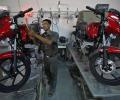
After selling brands like Pulsar, Boxer, Platina and RE in over 70 countries, Bajaj Auto plans to enter Thailand this year followed by Brazil next year.

The electric scooter juggernaut which has been picking up momentum with heady growth month-on-month is now slowing down. The combined number of registrations in April of eight electric two wheeler companies has seen a dip of over 1 per cent to 43,061 vehicles, according to data from the Ministry of Road Transport & Highways' site VAHAN. The reasons are the continuing shortage of chips, especially after the Ukraine-Russia war, and the spate of fires which have led to scooters being recalled by manufacturers.

Aided by robust demand, automobile retail sales in India rose by 11 per cent last year as compared to 2022, dealers' body FADA said on Monday. The overall domestic automobile retail sales stood at 2,38,67,990 units in the 2023 calendar year as compared to 2,14,92,324 units in 2022. Passenger vehicle sales stood at 38,60,268 units last year, up 11 per cent from 34,89,953 units in 2022.

The traffic tells a story. During the lockdown, it took 45 minutes to zip through the deserted 35-km stretch from Chennai to reach the automobile heart of Sriperumbudur-Oragadam, where the big names of the car industry - Hyundai Motor India, Renault-Nissan India, Daimler India Commercial Vehicles, Apollo Tyres, and Royal Enfield - are based.

Ola Electric's initial public offering (IPO), of Rs 5,500 crore, is essentially aimed at ensuring the company maintain its top position in the electric two-wheeler segment, with incumbent players TVS and Bajaj Auto giving a fight to the number one player in market share. Most experts and competitors say the amount being raised is in line with the investment required to expand the electric-vehicle (EV) business. There are two discernible trends in the competitive electric two-wheeler market.

Movement in the stock market this week will largely be driven by global trends, macroeconomic data announcements and trading activity of foreign investors, analysts said. Equity benchmark indices, which are on a dream run for the past several days, will also track trading in global oil benchmark Brent crude and movement of rupee against the US dollar. "The next FOMC (Federal Open Market Committee) meeting is scheduled for mid-September, but before that, the market will be closely watching upcoming US economic data.

Maruti's exports in May were down 2.4% at 9,089 units

A good agricultural harvest and a timely arrival of monsoon, besides a slew of government schemes, have also come as a bounty.

Losers include ONGC, Bajaj Finance, Reliance, SBI, Hero MotoCorp, ICICI Bank, L&T, Vedanta, Yes Bank and Axis Bank, falling up to 2.54 per cent. On the other hand, Tata Steel, PowerGrid, HCL Tech, Kotak Bank and Maruti were the top gainers on Sensex, rising up to 2.31 per cent.
New products being designed mainly for auto, oil & gas sectors; firm is raising Kalinganagar plant capacity from three mtpa to eight mtpa

The Softbank-backed company has set a price band of Rs 72 to Rs 76 per share for the maiden share sale and is expected to test the appetite for new-age loss-making companies.

Indian auto industry's dependence on China is high and it will continue to be so in the BS-VI era and as the country moves towards electric mobility. Domestic players lack both technological competence and the sheer pricing advantage that support Chinese imports.
After a turnaround two years ago driven by heavy tax breaks currently available in Uttarakhand, this auto bulb industrial unit is now enjoying the benefits of slowdown in auto sector as it is mainly producing replacement bulbs only. "Sales in the auto sector have taken a nosedive during the past one year. So it is natural that our bulbs will be used in old vehicles," said Rajiv K Agarwal, managing director of GBPL, which situated at Patel Nagar, Dehra Dun.
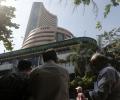
The S&P BSE Sensex ended the day at 28,226, up 85 points, while the Nifty50 settled at 8,734, up 18 points.
The front pages have been highlighting new vehicle launches, which are timed for the festive season. If these are successful, it could mark the bottoming out and turnaround of the automobile sector.

The stock of Mahindra & Mahindra (M&M) has been touching successive all-time highs on the bourses and, over the past year, gained 81 per cent. While the S&P BSE Auto Index has not performed poorly, registering gains of 73 per cent, it still trails the company by 800 basis points (bps) during this period. There are multiple reasons why investors are beating a path to M&M's counter.

Tata Motor's owned Jaguar Land Rover (JLR) on Tuesday reported a 68 per cent increase in retail sales for the first quarter ended June 30 at 124,537 units as compared with the same period of the previous fiscal, reflecting the continuing recovery in demand from the COVID 19 pandemic. The company had retailed 74,067 units in the April-June quarter of 2020-21. However, wholesales, in particular, were lower than demand would have permitted due to semiconductor supply issues affecting the global auto industry, JLR noted in a statement.

Net sales growth for the quarter ended December (Q3FY20) was 4.5 per cent on a year-on-year (YoY) basis for companies that have declared their results so far, compared to an 8.4 per cent rise in the first half of the financial year. This indicates that there could be a further rise in days' sales of inventory.

The second wave of the pandemic in the country has derailed the recovery momentum of the domestic auto industry, which was poised for a comeback in the current fiscal after witnessing the two consecutive challenging years, ratings agency ICRA said on Thursday. Unlike the first wave where infections were largely localised to urban clusters, the second wave has seen deeper and wider penetration, including into rural hinterlands. Accordingly, outlook for various segments has been revised downwards, it said.

Air India will soon have a new crew management system that will help strengthen rostering rules and enable faster recovery from scheduled disruptions. In a message to the staff on Friday, Air India CEO and MD Campbell Wilson said that in the next two weeks, there will be the CAE Crew Management System that will "strengthen our systems' adherence to rostering rules, improving the tracking of training & qualifications, and enabling faster recovery from schedule disruptions". The new system also comes against the backdrop of concerns flagged by pilots' unions about rostering issues.

Passenger vehicle wholesales in India increased by 11.14 per cent to 2,76,554 units last month as compared with same month last year amid supply chain challenges, unavailability of semiconductors and higher container charges, auto industry body SIAM said on Thursday.
According to the monthly sales figures released by the Society of Automobile Manufacturers on Wednesday, motorcycle sales in the domestic market during September declined 18.40 per cent to 5,48,816 units compared to 6,72,570 units in the same month last year.
Stung by the government's punitive action on electric two-wheelers, registrations in April fell by nearly a fourth to 62,581 from 82,292 in March, according to data from VAHAN. Electric two-wheeler companies, including Okinawa, Hero Electric, Ather Energy, and TVS, have all clocked their lowest registrations in the four months of this calendar year. Ola Electric has been the only exception to this bloodbath, and has crossed its March numbers, hitting 21,560 registrations in April, which is its highest in this calendar year. As a result, there have been some interesting changes in the electric two-wheeler pecking order.
Despite the hiccups experienced by the auto component industry, better growth prospects and low valuations suggest that it's a good time to buy solid companies in this space.
